
“It sucks for you, but we’re not gonna pass a tax on your citizens without them deciding,” Kicklighter said. “If they let their citizens vote on it and their citizens approve it, it’ll be approved by this county commission.”
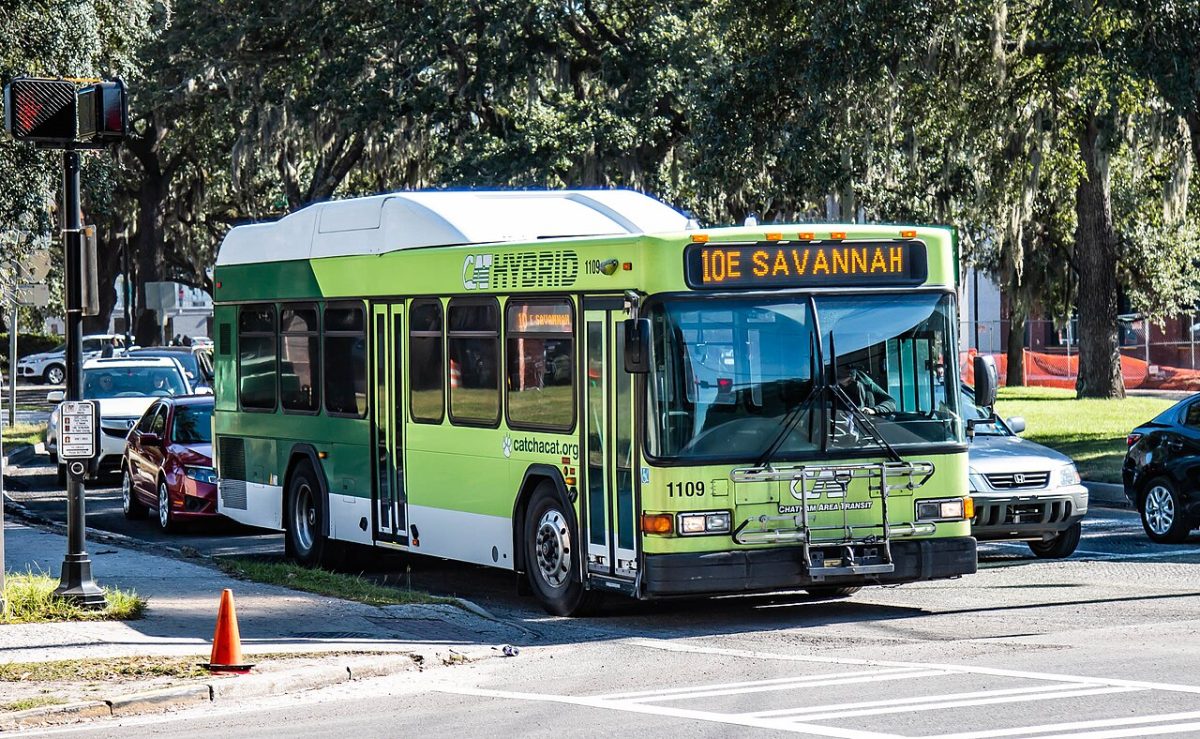
The above is from a WTOC article that covered a Chatham County commission decision to deny Port Wentworth’s request for expanded CAT service in that city. Also covered in that meeting was a discussion about replacing CAT’s paratransit services, rather than continuing to fund existing services.
And both decisions have relied on semantic games in order to obfuscate and confuse the public on what is the real impetus behind these decisions: the Chatham County Commission wanting to control the CAT Board.
County Commissioner Adot Whitely wrote in Facebook:
At our recent Commission meeting, we voted not to add Port Wentworth to the CAT special taxing district, and we also approved the County budget.
I want to address some misinformation directly.
Chatham County is not cutting Paratransit funding. Reports suggesting otherwise are misleading. The County has issued an RFQ and informed CAT that we may not renew the current contract. That does not mean service is being eliminated. It means we are reviewing our options because residents have raised serious concerns, including missed dialysis appointments, late service, and no pickups at all.
Chatham County Government fully funds countywide Paratransit service. No other entity pays for it. As Commissioner, I will continue to prioritize reliable service, fiscal responsibility, and accountability.
Regarding Port Wentworth: transit service there is currently paid through Port Wentworth’s budget and has been for roughly the last two years. The Commission denied the request to add Port Wentworth to the CAT taxing district because I will not support adding a new line item to residents’ tax bills without public input.
Port Wentworth residents already pay multiple tax line items. Adding the CAT tax would create another. If the City wants to fund transit service, it has options, including adjusting its millage rate or putting the CAT tax before voters.
Georgia law, O.C.G.A. § 32-9-11 requires a referendum when service is funded through a special tax district.
My recommendation to Port Wentworth is simple:
Put the CAT tax referendum on the ballot this November. The City has until August to make that request.
Consider whether the current CAT contract can be funded through the City’s millage rate.
Most importantly, engage Port Wentworth residents and let them decide what transit service should look like in their community.
I support transit. I support Paratransit. I also support transparency, accountability, and giving citizens a voice before adding new taxes to their bills
Let’s take each of these, one at a time.
Ending paratransit support
Whether the county commissioners are claiming to replace the existing paratransit functionality for the county or not, the end result of the commission’s actions is to pull funding from CAT for paratransit functionality. The WTOC article is not in error.
According to Commissioner Kicklighter in Facebook comments:
CAT vs. countywide paratransit funding…
Paratransit is a separate service with a different funding structure; it is funded countywide through the County’s main operating budget, not through the CAT transit tax budget.
Because of that distinction, any headline suggesting we “cut CAT and paratransit funding” or that we “voted on the CAT/paratransit budget” at that meeting is off base and confuses two very different funding streams.
In actuality, there is little confusion.
Currently paratransit services are provided by CAT. If such services are terminated, existing paratransit services are discontinued. The county commission may have some vague idea of contracting the services with another company or handling it themselves, but no such plan or contract or service is available at this time to take the place of CAT’s service.
This is somewhat similar to what happened when Chatham County took over fire department services for the unincorporated areas of the county: the will to do so had to face the difficulties associated with the reality of doing so, and the rollout was…painful and confusing for all.
I see little likelihood of the rollout out of a ‘separate but equal’ replacement for CAT’s paratransit system being less so. Until then, though, yes, the county commission is terminating paratransit services for the county.
Must Port Wentworth hold a voter referendum?
The second issue Commissioner Whitely brought up, as did Commissioner Kicklighter, is that for cities who previously opted out of being included in the special transit tax district to be re-included, they must hold a referendum for the voters. Both specifically cited a section of Georgia code in their arguments:
Georgia law, O.C.G.A. § 32-9-11:
(b)
(1) Any transit agency may, by contract with any local government for any period not exceeding 50 years, provide transit services or transit facilities for, to, or within that local government or between that local government and any area in which such transit agency provides transit services or transit facilities, except that if such services or facilities are to be funded wholly or partially by fees, assessments, or taxes levied and collected within a special district created pursuant to Article IX, Section II, Paragraph VI of the Constitution, such contract may only become effective if a majority of the qualified voters residing within the special district to be taxed authorize such contract or tax by referendum in a special election which shall be called and conducted for that purpose by the election superintendent of such local government.
What both commissioners and the rest of the county council failed to include in their selective quoting is the section of the law following that reads:
Georgia law, O.C.G.A. § 32-9-11:
(c) The purpose of this Code section is to facilitate the exercise of the power to provide public transportation services conferred by Article IX, Section II, Paragraph III of the Constitution. This Code section does not repeal any other law conferring the power to provide public transportation services or prescribing the manner in which such power is to be exercised. This Code section does not restrict the power of the Department of Transportation, the Atlanta-region Transit Link “ATL” Authority, or the Georgia Rail Passenger Authority to contract with any local government to provide transit services or transit facilities, including but not limited to rail transit services and facilities, pursuant to Article IX, Section III, Paragraph I of the Constitution.
The section of the law in bold text is the relevant part of the code, because it states that the law as adapted in this section does not repeal any previous relevant law.
The law governing the Chatham Area Transit Authority was passed in 1986, and is known by the short title of Chatham Area Transit Authority Act. This formed the basis for the creation of both the Chatham Area Transit Authority, CAT, as well as the special tax district, as outlined in Chatham County Code, Chapter 13, governing Transit Services. And in this code we find the relevant sections for cities either opting out or opting back into the special tax district:
§13-103 Exclusion.
1. Except for the City of Savannah, any city in Chatham County
may exclude itself from the provisions of this Act. Such
exclusion may be accomplished by a resolution adopted for
that purpose by any such city if such resolution is adopted
within 90 days after the effective date of this Act and is
approved by a minimum of two-thirds of the members of the
governing authority of such city.2. Any city in Chatham County which adopts a resolution pursuant
to subsection (1) of this section may, at any subsequent
time, petition the Board of Commissioners of Chatham County
to come back under the provisions of this Act. Such petition
shall take the form of a resolution duly adopted by the
governing authority of the municipality. After receiving
such petition, the Board of Commissioners of Chatham County
may notify the governing authority of the petitioning city of
the time when the city, a portion thereof, or none of the
city will be included in the special district for transit
services and may take such action as may be necessary to
include the city or a portion thereof within the special
district for transit services.
In other words, to opt back in, all that’s required is that two-thirds of the city’s governing members must approve the resolution asking to be included. It does not require a vote by people.
And this works with the Georgia Constitution, too. The relevant section:
Paragraph VI. Special districts. As hereinafter provided in this Paragraph, special districts may be created for the provision of local government services within such districts; and fees, assessments, and taxes may be levied and collected within such districts to pay, wholly or partially, the cost of providing such services therein and to construct and maintain facilities therefor. Such special districts may be created and fees, assessments, or taxes may be levied and collected therein by any one or more of the following methods:
(a) By general law which directly creates the districts.
(b) By general law which requires the creation of districts under conditions specified by such general law.
(c) By municipal or county ordinance or resolution, except that no such ordinance or resolution may supersede a law enacted by the General Assembly pursuant to subparagraphs (a) or (b) of this Paragraph.
This section of the Georgia Constitution does not require a vote by the people. It only requires a properly passed state law and/or municipal or county ordinance. The Chatham county ordinance states that a community can opt in by a vote of two-thirds of the city’s governing members.
The Port Wentworth city council vote to be included was unanimous:
Port Wentworth’s current city council unanimously approved a resolution supporting membership in CAT’s taxing and service district, Davis said during the presentation. He said the proposal is now expected to go before the Chatham County Commission for consideration in June after recent discussions between city officials, county leaders and legal counsel.
Now, Commissioner Whitely brought up a discussion documented in CAT Board meeting minutes from the November 21, 2023 meeting where the CAT outside counsel, Andrew Walcof, stated:
So local laws affect a local area only, have the force of state law, but
they’re not passed by the entire state legislature. So the Georgia Transit Authority Act that I mentioned a minute ago, 3299 and the following sections, is a general law. It provides that a transit agency can contract with the local government to provide transit services. But there’s an important caveat there. If those services are funded by taxes that are levied on the taxpayers who live within that special district, there has to be a referendum.
What he’s referencing, the Georgia Transit Authority Act, is coded in the section I copied earlier, O.C.G.A. § 32-9-11, and is the text being quoted by Commissioners Whitely and Kickstarter to justify turning Port Wentworth down.
But Wolcof didn’t address the meaning of the section of that same law that states it does not repeal previous laws, such as the CAT Act. And the 1986 CAT Act has been amended twice, in 2012 and again in 2025, and the only modifications have been to members of the CAT Board, including the addition of a representative from Port Wentworth city council if the city chooses to exercise its option to participate under the CAT Act.
That the CAT Act, and its implementation and funding structure, has not been repealed or superceded is still the understanding encoded in Chatham county ordinances. And it is based on this understanding of the law that the Port Wentworth city leaders have been operating, and their frustration with the Chatham County commission and its recent pushback is understandable. Especially since, before the hand waving on tax referendums, Chatham County Chairman Ellis wrote the Port Wentworth leaders that their request wouldn’t be considered because of the ongoing litigation related to the makeup of the CAT Board.
And that’s really what this is all about.
This is all really about who controls CAT’s Board
Chairman Ellis and the rest of the county commissioners can quote bible and verse of Georgia laws governing CAT all they want, but the reality behind their recent rejection of the Port Wentworth request and their discontinuing paratransit services with CAT is solely based on their disagreement about the structure of the CAT Board.
Georgia legislators modified the board in 2025 to include more representation from the community and from cities within the county. And the county commissioners, in particular Chairman Ellis, vehemently reject this change.
The county commission has not only sought to nullify the change, and challenged the change in court (and so far, has lost) it has also a) threatened to terminate its contract with CAT, b) denied CAT’s request for a higher millage rate to cover costs), c) discontinued paratransit services with CAT without having a replacement, and d) is now rejecting CAT expansion into cities like Port Wentworth.
The county commission is also overplaying problems CAT might have, and discounting the steps CAT is taking to fix these problems.
Now they’re employing a disingenuous PR campaign related to the Port Wentworth request that really, the citizens of the community have to vote for being taxed in the special district when no member of those included within the special tax district has ever had the chance to vote on inclusion in the past…but the county commission never had an issue with this before now.
And saying that Port Wentworth can just continue to pay for CAT services using general funds asks us to ignore the fact that Port Wentworth general funds are taxpayer funds, which conflicts with the commission members’ expressed concerns about citizens being able to vote before being taxed.
The county commission is undermining our county transit system, actively harming it, and we’re at risk of losing this service because of the commission’s stubbornness. No amount of hand waving or semantic games can hide the reason behind the county commission’s actions: control of CAT’s Board.
Now, there’s a real risk of losing paratransit services in the county, as well as people in Port Wentworth losing existing and future transit opportunities. And if the cuts to funding continue, we could lose it all.
This has got to stop.